

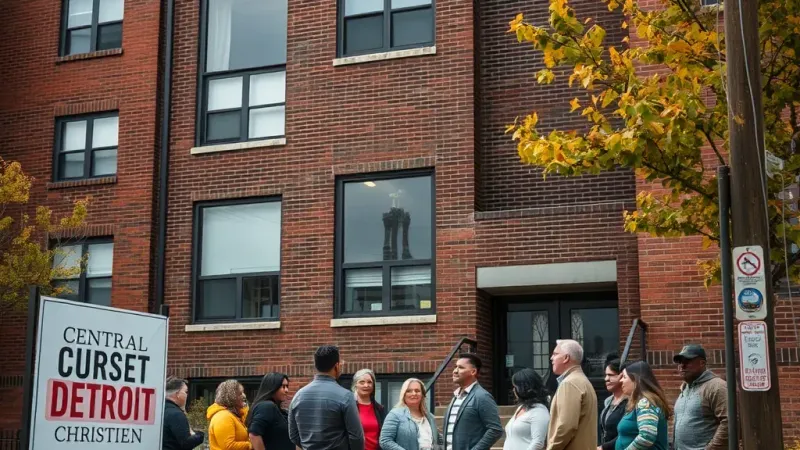
Central Detroit Christian is undertaking the Piety Hill II project, an affordable housing initiative designed to address community needs in the North End neighborhood. According to the available details, the Piety Hill II project successfully adds thirty-two new homes to the area, bolstering the local residential landscape and expanding housing opportunities for residents.
In total, the development encompasses a significant number of residences dedicated to community members with limited financial resources, ensuring long-term affordability in the community. Specifically, there are forty-three total units reserved for lower-income households within the overall housing framework. To maximize the utility of existing neighborhood structures alongside brand-new construction, there are also eleven existing apartments undergoing renovation as part of the broader community effort to improve local living conditions.
Eligibility guidelines have been established to direct these housing resources to the intended population. Households earning between thirty and sixty percent of the area median income are eligible to apply for and reside in these units, ensuring that lower-income families and individuals can secure stable, affordable housing in the neighborhood.
Financial investments and funding sources play a crucial role in bringing developments of this nature to fruition. To manage and resolve environmental site challenges, a brownfield grant totaling $450,000 was tapped for site contamination on the property. Furthermore, economic evaluations of the construction work indicate that new home construction costs roughly $150,000 more than multifamily units, reflecting the higher expenses associated with building individual single-family structures rather than multi-unit housing complexes.
This housing development takes place alongside other residential construction trends across the municipality. Records for Detroit indicate that single-family home construction permits reached thirty-four last year, demonstrating ongoing activity in the local building sector. Looking toward future municipal housing goals, Mary Sheffield noted that Project 1,000 aims to deliver one thousand new infill homes by 2031. This timeline provides a broader framework for addressing housing availability and supporting neighborhoods throughout the city in the years ahead.